
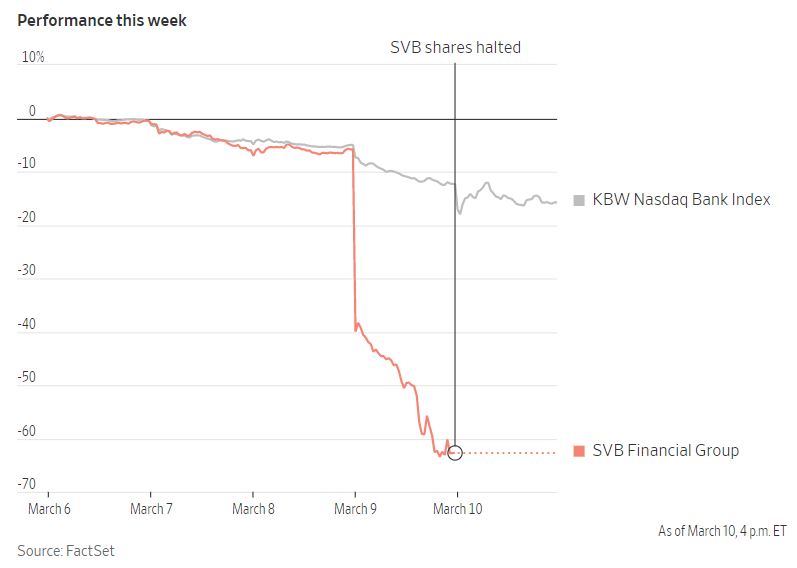
Silicon Valley Bank, which is the 16th-largest bank in the United States with assets of around $209 billion, collapsed last Friday following a run on deposits that doomed its plans to raise fresh capital. The Federal Deposit Insurance Corp. took control of the bank via a new entity it created called the Deposit Insurance National Bank of Santa Clara. All of the bank’s deposits have been transferred to the new bank. Insured depositors were said to have access to their funds by this morning, while depositors with funds exceeding insurance caps will get receivership certificates for their uninsured balances. SVB catered mainly to the insular ecosystem of startups and the investors that fund them, making it less diversified than a typical banking institution. Its deposits boomed alongside the tech industry, rising 86% in 2021 to $189 billion and peaking at $198 billion a quarter later. Startups drained their deposits with SVB faster than the bank expected at the same time that new investment stalled, meaning fresh money wasn’t coming into the bank. SVB poured large amounts of the deposits into U.S. Treasurys and other government-sponsored debt securities. Rising interest rates dented the value of its massive bond portfolio, and the bank needed fresh capital. SVB hired Goldman Sachs Group earlier this week to execute a private stock sale, but then Moody’s Investors Service informed SVB that it planned to downgrade the bank’s credit ratings. As a result, SVB decided to scrap the planned $2.25 billion share sale Friday morning.
.jpg)
The Silicon Valley Bank failure on Friday prompted a deepening sell-off with the Dow Jones Industrial Average falling about 345 points. All S&P 500 sectors fell in afternoon trading and Treasury yields tumbled, with investors adjusting their rate-increase expectations lower. The S&P 500 fell nearly 5% for the week, while bond yields fell as bond prices rose. The issue is said to highlight the broader impact the Fed's interest-rate increases are having on the economy and banks in particular. With wage growth seen as a major contributor to inflation, and unemployment ticking higher, it's possible that the Federal Reserve may alter its rate-hike pace. Investors have been looking for a slowdown in the labor market that would allow the Fed to ease its pace of rate increases. The yield on the 2-year note dropped to 4.586%, its largest single-day decline since 2008, and traders are now once again betting the Fed will cut interest rates before year end. Major US banks had already lost billions in market value the previous day after Silicon Valley Bank's troubles first prompted broader concerns about the health of the financial sector. SVB's difficulties highlight a consequence of rising interest rates for some lenders, with many banks that hold large quantities of bonds sitting on large unrealized losses. The broader worry is that other banks lent a lot in the good times when rates were so low, which may come back to haunt them now that rates have risen so dramatically. Markets sold off across the globe , with several banks among the worst performers in the stock market, including PacWest Bancorp, Western Alliance Bancorp and First Republic Bank, which all plunged more than 20%.
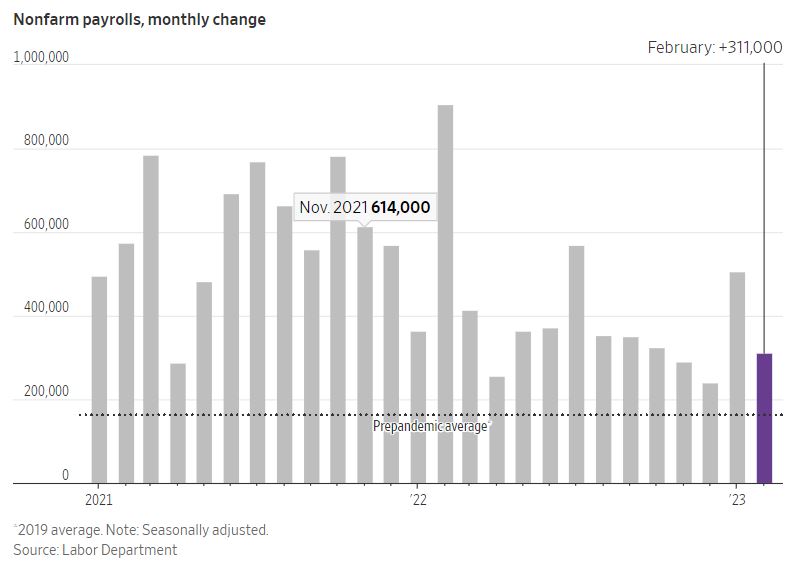
The US economy added 311,000 jobs in February, according to the Labor Department. The unemployment rate rose to 3.6%. This news supports other evidence of a strong US economy despite high inflation and rising interest rates. Employers in leisure and hospitality, retail, and healthcare increased hiring last month. However, transportation and warehousing, finance, manufacturing companies, and the tech-heavy information sector cut employees. Average hourly earnings grew 4.6% in February from a year earlier, slightly below last year but above pre-pandemic levels. The job market continues to surprise economists, with many predicting that job gains would cool sharply or even become losses. The Federal Reserve is closely monitoring jobs and inflation figures as it decides how much to raise interest rates this month. The new jobs offset cuts announced by large employers such as Google, Amazon, and Disney. There are indications that strong hiring could continue, with employers having nearly double the number of open jobs as unemployed people seeking work. Elevated wage growth is a challenge for the Fed and an indication that the economy is still overheating. Overall, the US economy remains resilient despite high inflation and interest rates.

 860-291-1998
 Schedule Demo