
Keeping you informed on the markets, trends and how Freedom Advisors is serving you.
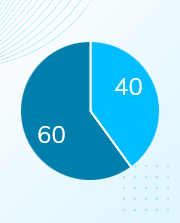
The 60/40 portfolio—a time-tested allocation of 60% equities and 40% fixed income—has been a cornerstone of moderate investing strategies for decades. Yet, recent market dynamics have shifted many portfolios away from their intended balance. Without proper management and regular rebalancing, what began as a moderate 60/40 allocation may now resemble a more aggressive 70/30. This quiet transformation carries the risk of significant implications for investors who rely on the stability of a balanced portfolio.
Over the past few years, equities have significantly outperformed fixed income, driven by robust stock market gains and the headwinds facing bonds amid rising interest rates. As a result, equity allocations in many portfolios have ballooned. While the immediate benefits of equity-driven growth may seem appealing, the increased exposure to equities brings greater risk. A higher equity weighting amplifies volatility and can lead to outsized losses during market downturns, undermining the stability that investors seek from a 60/40 allocation.
The risks of imbalance go beyond the simple equity-to-fixed income ratio. Within the equity allocation itself there’s been a growing concentration in large-cap growth, driven largely by the "Magnificent 7" (a group of dominant tech and tech-adjacent companies including Apple, Microsoft, Alphabet, Amazon, Meta, Tesla, and Nvidia). These companies have been responsible for a disproportionate share of equity market returns in recent years, especially within indices like the S&P 500.
This super-concentration in large-cap growth poses a dual threat:
The combination of equity market outperformance and large-cap growth dominance highlights the importance of rebalancing. Regular rebalancing involves not just realigning the equity-to-fixed income ratio, but also addressing concentration risk within the equity allocation itself. Paring back on overexposed assets—whether they’re equities as a whole or disproportionately large positions in mega-cap stocks—and allocating to underweighted areas can restore the intended diversification and risk profile.
The purpose of a balanced portfolio like the 60/40 model is not just about achieving steady returns, it’s about managing risk. Fixed income provides stability, acting as a counterbalance to the inherent volatility of equities. Within equities, diversification across geographies, sectors, market capitalizations, and styles helps protect against the overconcentration of risk. Allowing large-cap growth stocks to dominate an equity allocation undermines this principle, leaving portfolios exposed to the fortunes of a few companies.
For most moderate investors, 70/30 is not a prudent replacement for 60/40. While equity market gains may have driven recent portfolio growth, this drift toward higher equity exposure, coupled with an overconcentration in large-cap growth, introduces risks that could derail long-term objectives.
Advisors and investors must remain vigilant, rebalancing not just between equities and fixed income, but also within equities to address concentration risks. Staying disciplined in maintaining diversification and balance is essential to navigating the evolving market landscape while preserving the integrity of a portfolio’s risk profile.
MT-664671

Freedom Advisors offers a turnkey asset management platform (TAMP) with a complete portfolio management solution, comprehensive outsourcing of operations, and high-touch service to help advisors run efficient practices and deliver superior outcomes for their clients.

This website is for investment professionals only. It is not intended for retail investors. Retail investors who are interested in our investment services should contact a financial advisor.
© Freedom Advisors. All rights reserved.
 860-291-1998
 Schedule Demo