
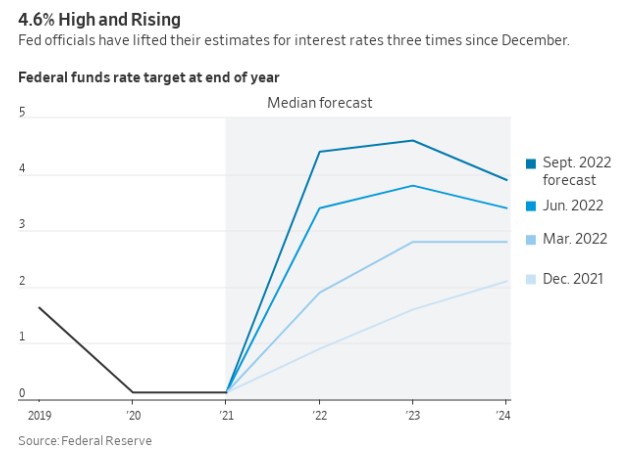
As markets expected, the Federal Reserve raised the benchmark lending rate to 3.0 – 3.25% on Wednesday, notching a third consecutive jumbo rate hike. The committee is expecting to end the year at a range of 4.0% to 4.5%, suggesting that they will continue hiking rates through the end of 2022.
Federal Reserve Chairman Powell acknowledged that there would be a period of below-trend growth as they work to combat persistent inflation. Weaker growth for the U.S. economy raises the prospects of a recession and signals that the Fed is willing to cause a painful slowdown to curb price pressures. The median forecast for the 19 Fed officials for the unemployment rate next year shows a rise to 4.4% from the current level of 3.7%. "We have always understood that restoring price stability while achieving a relatively modest increase in unemployment and a soft landing would be very challenging," Powell said Wednesday. "We have got to get inflation behind us. I wish there were a painless way to do that. There isn't."
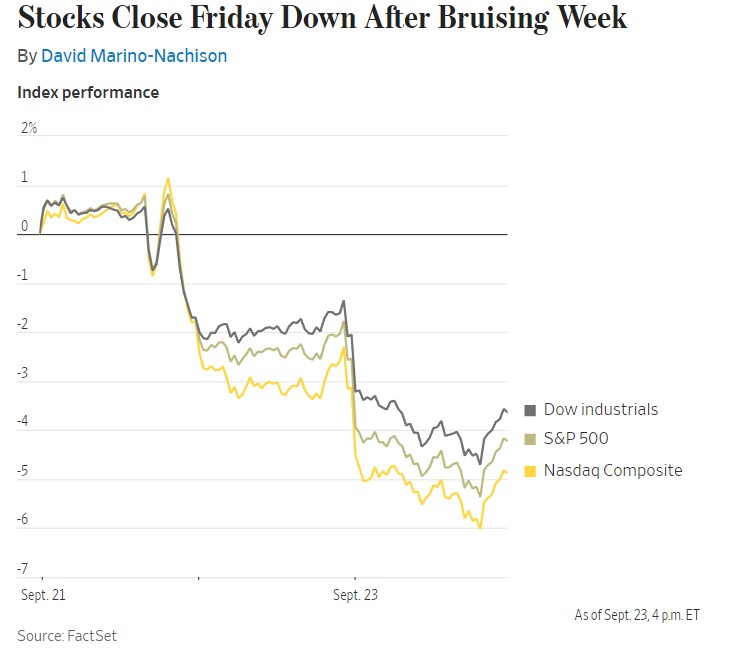
Equity markets tumbled during the week’s final days as investors sold risk assets in the face of increasing recession risks. The Dow Jones Industrial Average, S&P 500 and Nasdaq Composite saw steep price declines following Wednesday’s Fed announcement. However, the pain did not stop there as bond yields surged, the VIX Index rose above 30, and the benchmark West Texas Intermediate fell to $79 a barrel for the first time since January. In addition, the 2-year U.S. Treasury yield jumped to over 4.2%, its highest level since October 2007, and the 10-year U.S. Treasury yield notched its eighth consecutive week of gains, finishing at 3.695%.
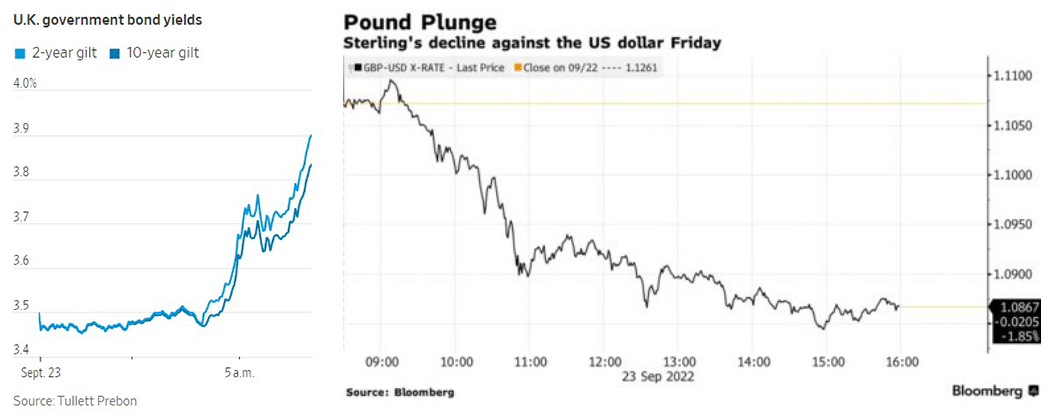
Concerns over new U.K. Prime Minister Liz Truss’s tax cuts to stimulate the economy have pushed down investor sentiment and sent Gilts higher, as investors move to cash and push up short-term yields. The tax cuts are the largest since 1970 and sparked one of the most significant selloffs in the British pound since March 2020. As a result, the pound has weakened against the dollar this year, touching a 37-year low and nearing parity.

 860-291-1998
 Schedule Demo