
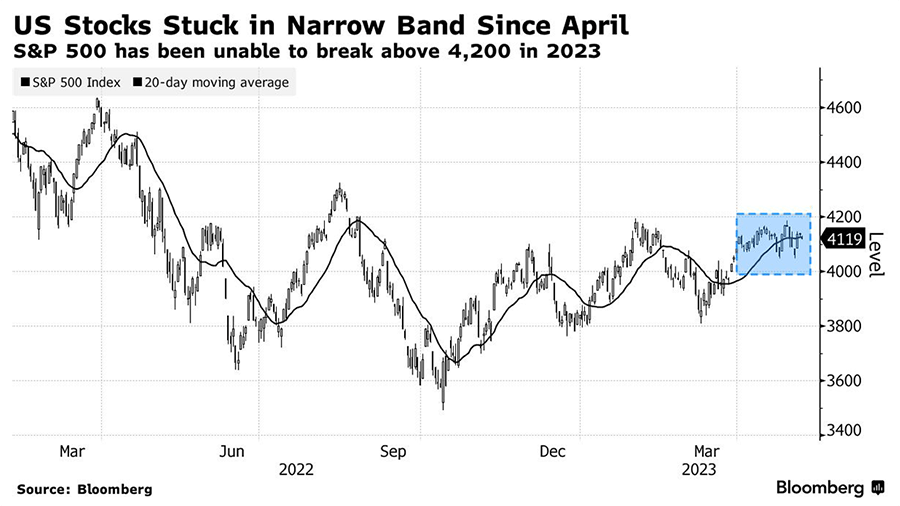
US stocks fell last week while bond yields rose as traders assessed unexpected jumps in long-term inflation expectations and warnings about the debt ceiling. The S&P 500 ended the week with a loss of 0.3% while the Nasdaq 100 managed a gain of 0.6%. A preliminary University of Michigan sentiment survey released on Friday revealed that consumers expected prices to rise at a 3.2% annual rate over the next five to 10 years, the highest since 2011. PacWest Bancorp and JPMorgan Chase & Co. stocks were among those that fell. The call to raise the debt limit by Treasury Secretary Janet Yellen added to investor worries. Swaps traders have priced in a one-in-10 chance that there will be another interest rate hike at the next Federal Reserve meeting. The policy-sensitive two-year yields climbed to 4.00% while the 10-year rose to 3.45%. Stocks have been moving in a narrow range since April and investors are waiting for a signal that the Fed’s rate-hiking cycle is at an end. Solar stocks outperformed while the dollar rose, and Bitcoin dropped below $27,000.
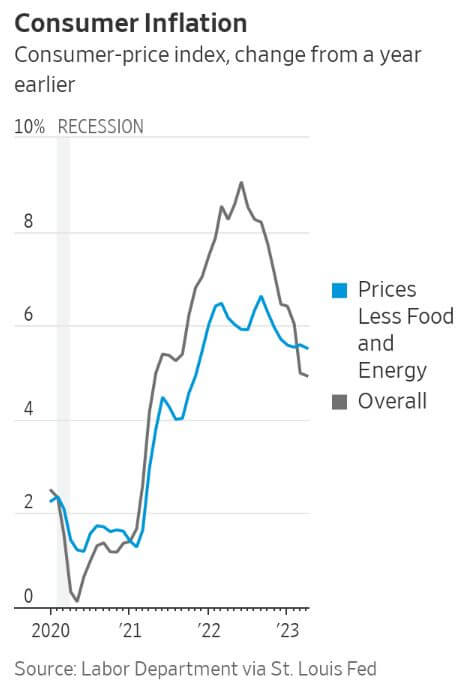
US inflation edged slightly lower in April, with consumer prices rising by 4.9% year on year, down from March’s increase of 5%, according to data from the Labor Department. The figures showed that price pressures have stabilized and may be slowing, making it easier for the Federal Reserve to pause interest-rate increases at its next meeting. Economists expect housing costs, which drove the increase, to cool in the coming months, as will gasoline and used-car prices. Core prices, excluding volatile food and energy items, rose by 5.5% from a year earlier, a slightly slower increase than in March. Some companies have been able to raise prices and boost profits without a consumer backlash, but they are beginning to see the impact of early signs of a consumer pullback. Supplier inflation also moderated in April, with the producer-price index increasing by 2.3% YoY, the slowest pace since January 2021. That represented a significant decrease from the prior month’s 2.7% increase and suggests lower future consumer price inflation. Meanwhile, applications for unemployment benefits rose by 22,000 to 264,000 last week, indicating rising layoffs. However, the labor market remains strong, with employers adding 253,000 jobs in April, with the unemployment rate falling to match the lowest reading since 1969. Fed officials are likely to pause interest-rate increases at their next meeting in June as they wait for signs of inflation declining towards their 2% target.
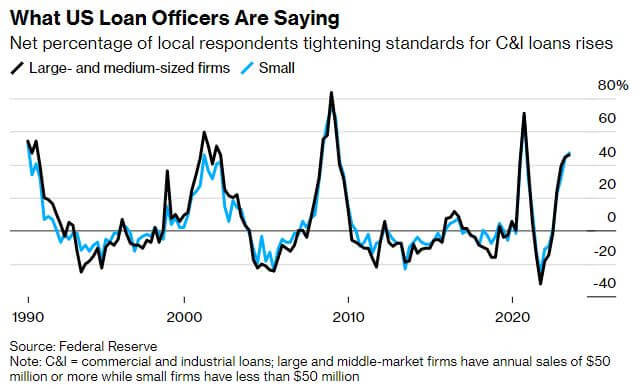
The collapse of four US regional banks since March sparked turmoil in the financial sector, and there are increased concerns that lenders would rein in access to credit in a way that could tip the US economy into a recession. According to a survey released by the Federal Reserve, banks in the US have tightened loan standards and reported weaker demand for loans in the first quarter of 2023, extending a trend that began before recent banking sector stresses emerged. The poll, known as the Senior Loan Officer Opinion Survey, or SLOOS, showed that banks cited a lower risk tolerance, a dimmer economic outlook and worsening industry problems as their reasons for tightening credit in Q1. The proportion of banks tightening terms on commercial and industrial loans for medium and large businesses rose to 46%, up from 44.8% in Q4 2022. The report also showed that there was much weaker demand for credit, with 55.6% of banks reporting weaker demand for commercial and industrial loans among large and mid-size firms, the highest since 2009 during the global financial crisis. Experts warn that the confirmation of tighter lending standards pushes recession odds even higher, with Michael Kantrowitz, chief investment strategist for Piper Sandler & Co., stating in a note to clients that, "Nothing is a guarantee, but these odds are hard to argue against." Chicago Fed President Austan Goolsbee warned earlier in the week that the credit crunch, or at least a credit squeeze, is beginning.

 860-291-1998
 Schedule Demo