
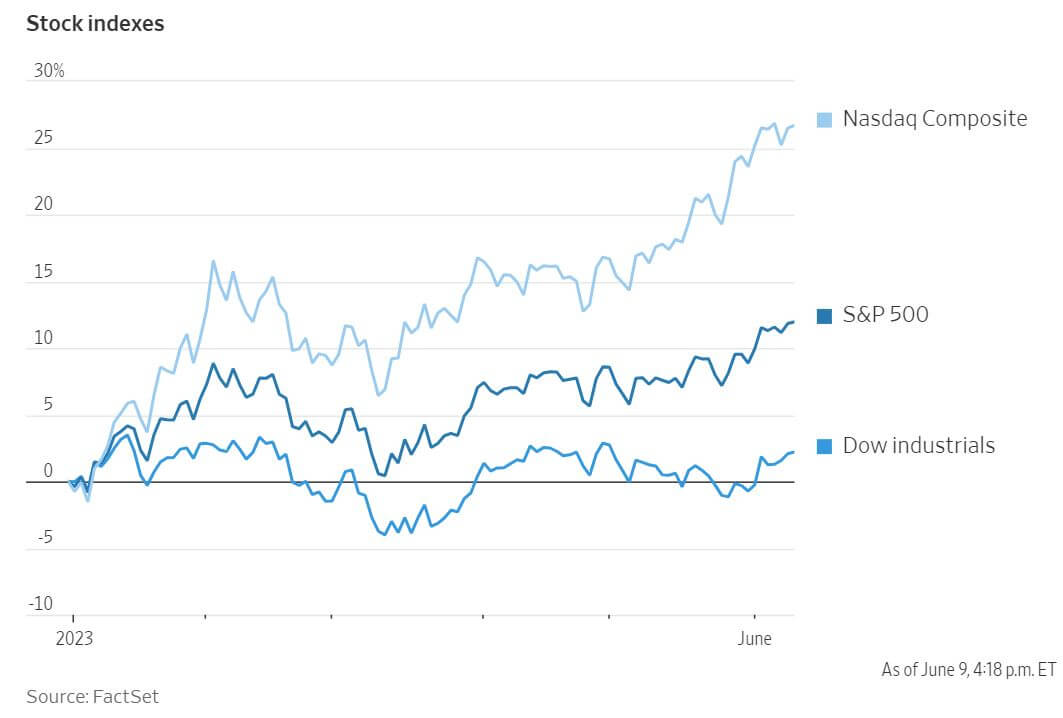
The S&P 500 continued its upward trend last week fueled by the climbing technology sector and expectations that the Federal Reserve is approaching the end of its interest rate hikes. With the rise in tech stocks, the S&P 500 has now achieved a 20% gain from its October low, commonly considered a marker of a bull market. The recent rally in stocks has been supported by the resolution of the debt-ceiling fight and signals from the Federal Reserve about maintaining interest rates at their June meeting. Furthermore, the growing interest in artificial intelligence has propelled the shares of chip makers like Nvidia. However, analysts have expressed caution, suggesting that the rally could stall ahead of interest rate decisions from both the Federal Reserve and the European Central Bank scheduled for the following week. Potential obstacles remain for tech stocks, including a resilient labor market and persistent high inflation, which may lead to continued interest rate hikes. Tech stocks are particularly vulnerable to higher rates due to their valuation being based on expectations of significant profits.
Wall Street is currently displaying a bearish outlook on the stock market, with hedge funds and speculative investors betting heavily on a decline in the S&P 500, marking their most bearish positioning since 2007. However, they are simultaneously anticipating a rally in the tech-focused Nasdaq-100, with net bullish wagers approaching the highest levels seen in late 2022. This divergence in positioning highlights the fragility of the current stock rally in 2023, where the S&P 500 has risen by 12% so far, largely due to the contribution of big tech companies. The index could face a significant pullback if even one or two of these major companies encounter setbacks.
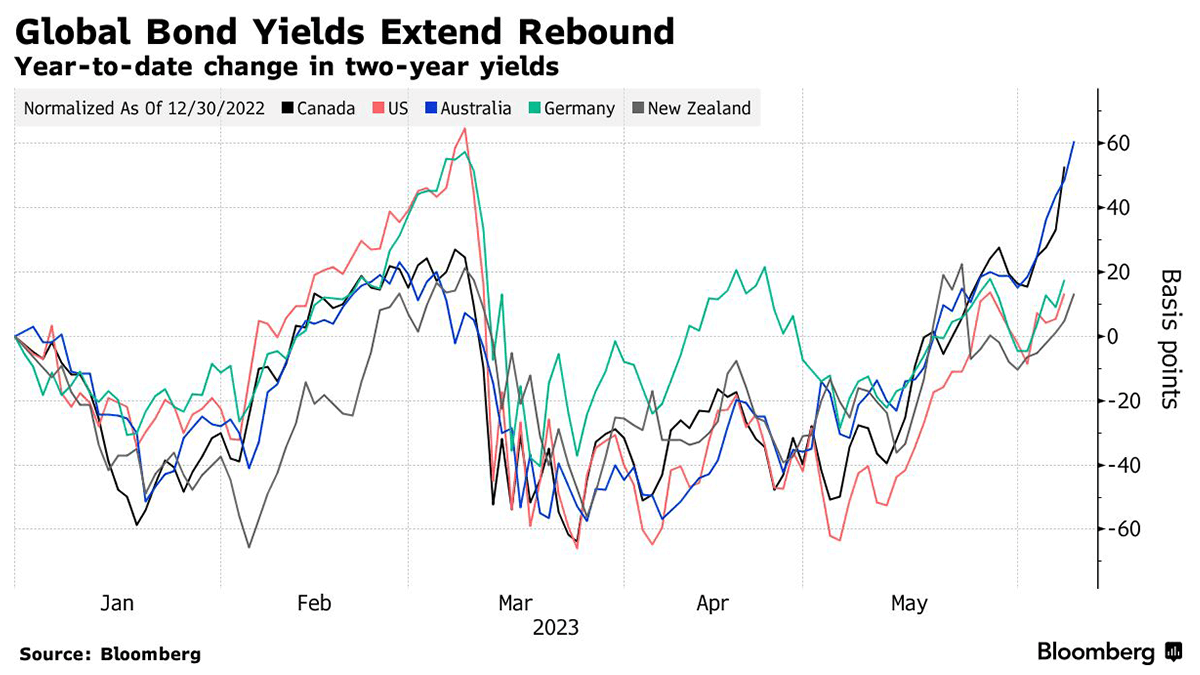
Global bond markets are experiencing a slump following two surprise interest-rate hikes, highlighting that central banks are still actively combating inflation. Investors are selling international sovereign debt after the Bank of Canada and the Reserve Bank of Australia unexpectedly raised rates to tackle persistent consumer-price increases. Shorter-maturity Treasury yields are nearing their highest levels since March, and Australian equivalents have reached levels not seen in over a decade. This shift is causing traders to reassess their expectations of Federal Reserve rate cuts later in the year, emphasizing the ongoing battle against inflation. Deutsche Bank strategists raised the question of whether the Federal Reserve might follow suit with a hike of its own or finally decide to keep rates unchanged after 10 consecutive increases. Investors briefly priced in a full quarter-point rate hike by the Fed before July, and although some easing is still expected by year-end, multiple rate cuts have been priced out of the market. A recent Bloomberg survey of economists showed most expected the Fed to pause at its June meeting, though a third still expected a hike of 25 basis points in July. The majority of the surveyed economists expected the Fed to continue tightening financial conditions by shrinking its balance sheet even after it reaches its peak interest rate for this cycle. All eyes are now on US inflation data for further insight into the Fed's policy trajectory. With inflation proving more persistent than anticipated, economists such as Diana Iovanel from Capital Economics believe the central bank will maintain higher policy rates for a longer period. While some firms suggest that US interest rates may have peaked, the situation in Europe is different. Traders are pricing in half a percentage point of rate hikes by the European Central Bank in the next three months, indicating that they believe the ECB must continue tightening due to inflationary pressures.
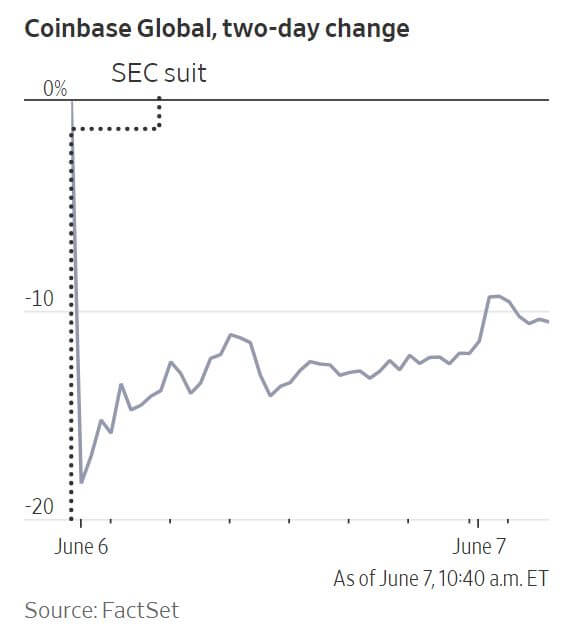
The Securities and Exchange Commission (SEC) filed a lawsuit last week against Binance, the world's largest cryptocurrency exchange, accusing the company of operating an illegal trading platform in the United States and misusing customers' funds. Binance, founded in 2017, quickly rose to become a dominant player in the cryptocurrency industry, accounting for a significant portion of global crypto trading volume. The founder and controlling shareholder of Binance, Changpeng Zhao, has also been named as a defendant in the lawsuit. The SEC alleges that Binance and Zhao diverted customers' funds to a trading entity controlled by Zhao, called Sigma Chain, which engaged in manipulative trading to inflate Binance's trading volume. The SEC also claims that Binance concealed the commingling of billions of dollars in customer assets by sending them to a third-party entity owned by Zhao, called Merit Peak. The lawsuit alleges that Binance traded 10 tokens that are considered securities, including Solana, Cardano, and Polygon, without complying with U.S. securities laws. The SEC also filed a lawsuit last week against Coinbase, the largest cryptocurrency platform in the United States, alleging that the company violated rules requiring it to register as an exchange and be overseen by the federal agency. The lawsuit, filed in Manhattan federal court, claims that Coinbase traded at least 13 crypto assets that are considered securities and should have been registered with regulators before being issued.
The lawsuits represent the SEC's effort to shift its enforcement strategy in the cryptocurrency industry from individual token issuers to the online platforms where these assets are traded. The SEC has been seeking to regulate the entire crypto industry and has been engaged in legal battles with major market participants, including Coinbase, Binance and Gemini. SEC Chair Gary Gensler has emphasized the need for crypto exchanges to register with the agency, stating that they perform functions similar to securities exchanges, such as holding customer assets and clearing transactions. Gensler has advocated for crypto exchanges to separate their functions, resembling the structure of traditional financial markets. The agency is particularly focused on ensuring proper disclosures and investor protections in the rapidly evolving and increasingly influential crypto market.

 860-291-1998
 Schedule Demo