
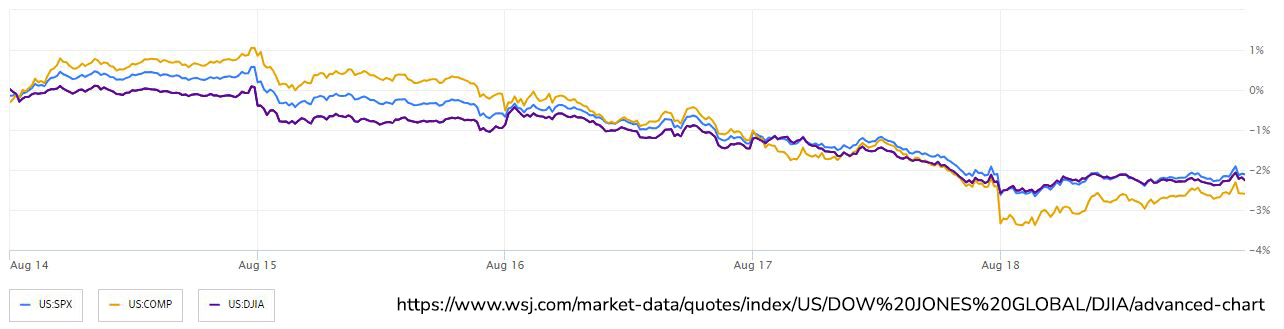
Mega cap tech stocks experienced a third consecutive week of decline, attributed to concerns about rising global interest rates, while bonds rebounded from recent lows. The S&P 500 dropped slightly in Friday trading, with the MSCI global equities benchmark facing its largest weekly loss since March. The Dow Jones Industrial Average remained relatively stable, but the tech-heavy Nasdaq 100 stayed lower. Bitcoin saw an 8% slide, and oil was poised for its first weekly loss since June.
Though fears of an imminent recession are diminishing, investors are now contending with persistent inflation and the potential for tighter policies. Worries are arising that as bond yields increase, the strong economy might prompt the Federal Reserve to raise interest rates further. This dynamic could lead to competition between the stock and bond markets, favoring the latter as a less risky option. Global bonds increased on Friday, with speculation that recent losses might be overblown.
Market tension is building ahead of the annual Jackson Hole policy makers' gathering in Wyoming. While expectations of economic acceleration are growing, there is limited evidence that robust growth will reignite inflation, potentially alleviating pressure on policy decisions. Nervousness is evident in the rising Cboe Volatility Index, which recently passed 18. Bitcoin traded around $26,000, and Ethereum fell 3.6% to $16,559.96. Bond yields on 10-year Treasuries declined by two basis points to 4.25%, with similar movements in German and British 10-year yields. West Texas Intermediate crude rose 1.4% to $81.31 a barrel, while gold futures remained largely unchanged.
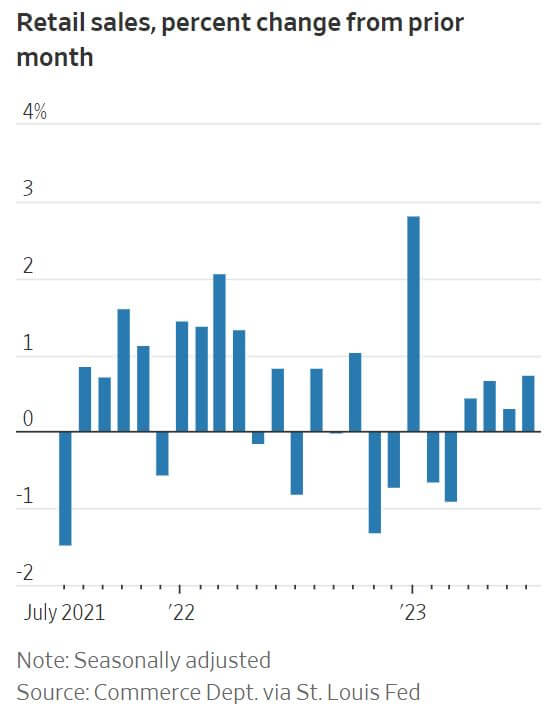
American retail spending experienced its quickest increase since the beginning of the year, demonstrating the resilience of the U.S. economy. Despite the Federal Reserve's interest rate hikes to counter inflation, consumers continued to spend more on items like dining out, back-to-school supplies and clothing. Retail sales, encompassing store, online and restaurant purchases, surged by a seasonally adjusted 0.7% in July compared to the prior month, a jump from June's 0.3% growth. The rise in retail sales surpassed the 0.2% increase in consumer prices for the same month, indicating that consumer spending is outpacing inflation. Although the strong labor market is contributing to consumer confidence and spending, economists anticipate a potential slowdown after the summer months, especially in sectors like travel and entertainment. The report also revealed that consumers increased spending at grocery stores, hardware stores and online platforms. However, sales declined at auto dealerships, electronics stores and furniture stores, which are sensitive to higher borrowing costs. Gasoline sales increased 0.4% in July, corresponding with a rise in gasoline prices. The report mainly captures spending on goods and not most services like travel, housing and utilities. Despite the positive outlook for consumer confidence and spending, certain retailers are preparing for uncertainty due to shifting consumer behaviors and the impact of the Federal Reserve's moves on spending patterns.
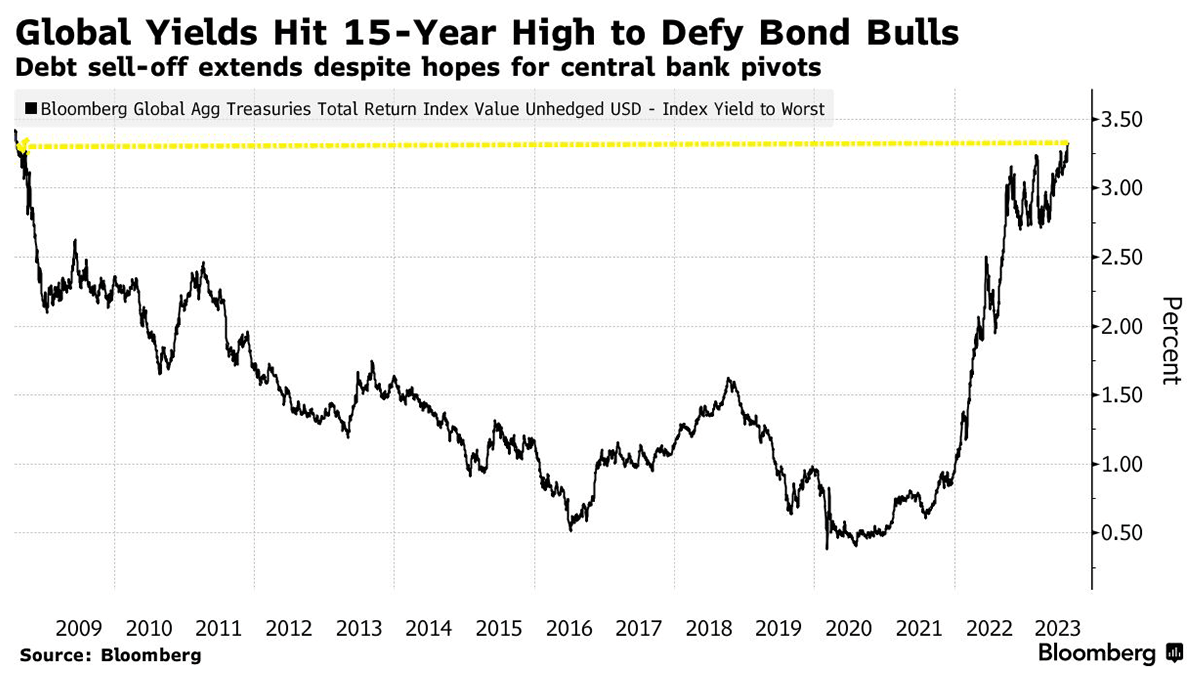
Global government bond yields are rising, including the US 30-year yield reaching levels not seen since 2011 and other benchmarks approaching levels from 2008. This rise is driven by robust economic data challenging the assumption that central bank rates have peaked. The 10-year US Treasury yield closed at its highest level since 2007 last week at 4.307%, while the 30-year US Treasury yield hit a 12-year high of 4.411%. Similar trends are observed in the UK and Germany. Treasuries have been leading the global bond sell-off as the US economy continues to perform well despite significant Federal Reserve rate hikes. Some experts suggest that an additional rate hike later in the year might be employed to ensure inflation remains contained. Despite the strong US labor market data, global bonds have suffered a 1.2% loss this year, contrasting the positive start they had due to expectations that rate hikes were ending.
However, investors are still showing interest in higher US yields, as evidenced by substantial investments in Treasury funds this year. Asset managers are increasing their long positions in Treasury futures as well. While global bonds might perform well due to nearing the end of central banks' rate hike cycles, the increase in US yields is also influenced by expectations of increased government bond issuance to address widening federal deficits. The inflation-protected variety of yields is leading this surge, reflecting investors' expectations for the performance of riskier assets. Elevated real rates could potentially signal that the Fed might need to resume tightening in the future to address potential risks.

 860-291-1998
 Schedule Demo