
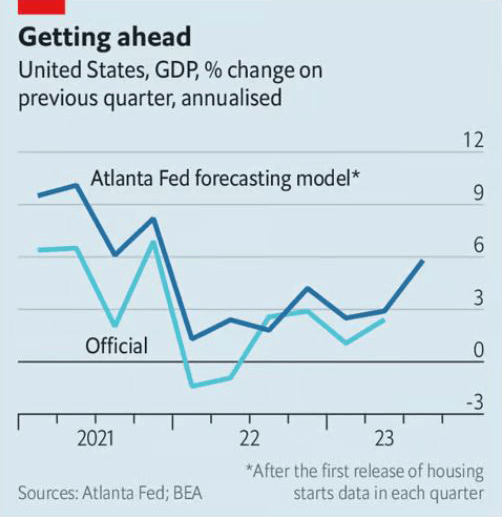
The US economy is defying predictions of a slowdown and is instead exhibiting robust growth. Recent data indicates the potential for annualized growth of nearly 6% in the third quarter, a rate seldom seen since 2000. This unexpected resilience is driven by better-than-expected indicators across various sectors. Manufacturing firms have seen a surge in new orders, while retail sales remain strong with consumers spending on dining, online shopping, clothing, and sporting goods. The construction industry has benefited from increased homebuilding activity. A critical factor supporting this growth is the strong labor market, with job growth outpacing working-age population growth, resulting in a low unemployment rate of 3.8%. However, concerns loom over the possibility of overheating and persistent inflation as a consequence of this robust growth. The Federal Reserve's Atlanta branch estimates third-quarter GDP growth at 5.8%, suggesting that the economy may be overheating despite the Fed's aggressive interest rate hikes. While this estimate may be somewhat exaggerated, it typically aligns with the general direction of the economy. Inflation, which had shown signs of slowing, could rebound if the economy continues to heat up, particularly due to worker and housing shortages. The strong American economy is also affecting financial markets, with rising yields on government bonds prompting debates about the neutral short-term interest rate and the timing of Fed rate adjustments. Smaller financial institutions are facing increased funding costs, and delinquencies on credit cards and car loans are rising. Higher mortgage rates are dampening the housing market. Despite these challenges, the US economy has a history of resilience. However, as yields rise, the challenges become greater. The current economic strength may not last indefinitely, and it is essential to monitor its sustainability.
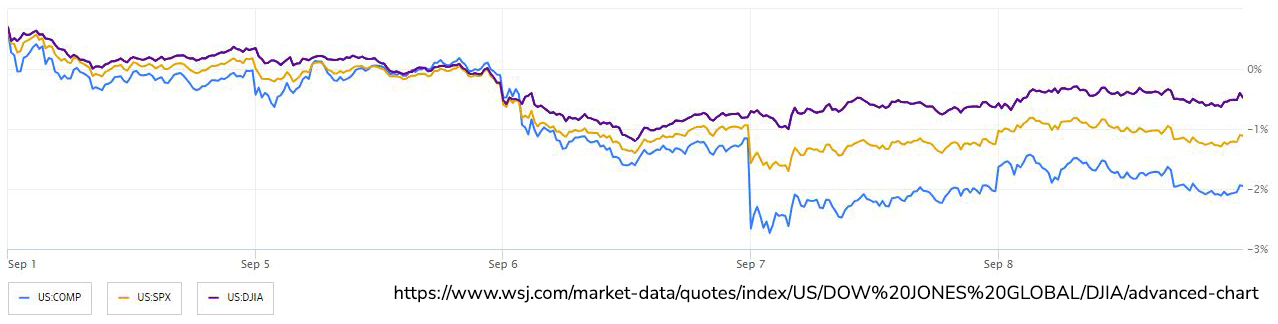
The US dollar has recently embarked on an impressive streak of consecutive weekly gains, attributed to the prevailing belief that the Federal Reserve will maintain elevated interest rates for an extended duration. Notably, the Bloomberg Dollar Spot Index recorded its longest uninterrupted run of upward movement since 2005. Concurrently, the S&P 500 exhibited a modest recovery after experiencing a three-day decline, although specific mega-cap stocks such as Nvidia Corp. and Tesla Inc. weighed down the market. Conversely, Apple Inc. demonstrated resilience following a substantial loss in market capitalization, particularly in anticipation of product unveilings including the iPhone 15, new smartwatches and the latest AirPods. Over the past month, major global currencies have generally depreciated against the US dollar, with emerging-market currencies like the Chinese yuan and Indian rupee nearing historical lows. This trend underscores divergences in the global economic landscape, with reports suggesting that the United States is displaying economic acceleration while growth in Europe and China is decelerating. Furthermore, this sustained advance in the US dollar has pushed its 14-day Relative Strength Index beyond the threshold of 70, a level often interpreted as indicative of an overbought market. Market experts are expressing caution, suggesting that the dollar's exuberance and popularity may make it ripe for a corrective pullback in the near term. Ten-year Treasury yields settled at 4.257%, from 4.260% Thursday.
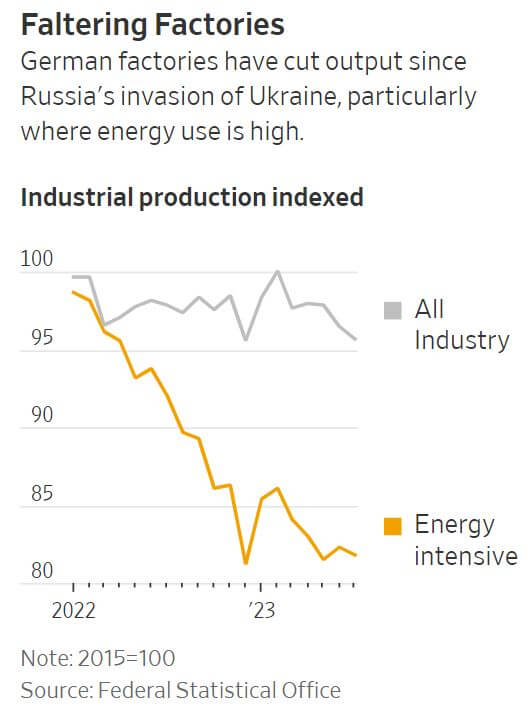
Germany's economy, once a powerhouse in Europe, faces a new downturn primarily due to its weakening manufacturing sector. Recent data indicates that the country's output is likely to contract in the current quarter due to factors such as higher energy costs, a challenging global market and fierce competition from China in key industries. The aftermath of Russia's invasion of Ukraine, which led to surges in energy and food prices, has also hit Germany hard. Germany's economic struggles are exacerbated by its heavy reliance on exports for growth, making it vulnerable to a global decline in demand for goods as consumers prioritize services after years of COVID-19 restrictions. Over the past five quarters, Germany's economy has grown only once, and it was 0.3% smaller in the second quarter of 2023 compared to the first quarter of 2022 when Russia's invasion occurred. In contrast, other major Eurozone economies like France, Italy and Spain have fared better, with positive growth rates during the same period. Furthermore, recent statistics reveal a 0.8% decline in industrial production in Germany in July compared to June, with a significant 4% drop from February 2022, coinciding with Russia's invasion. The Kiel Institute for the World Economy predicts a 0.3% contraction in the current quarter and a 0.5% contraction for 2023 as a whole, downgrading its previous estimate. While a rebound in August and September could prevent a contraction in the current quarter, business surveys suggest ongoing weakness in both the manufacturing and services sectors.

 860-291-1998
 Schedule Demo