
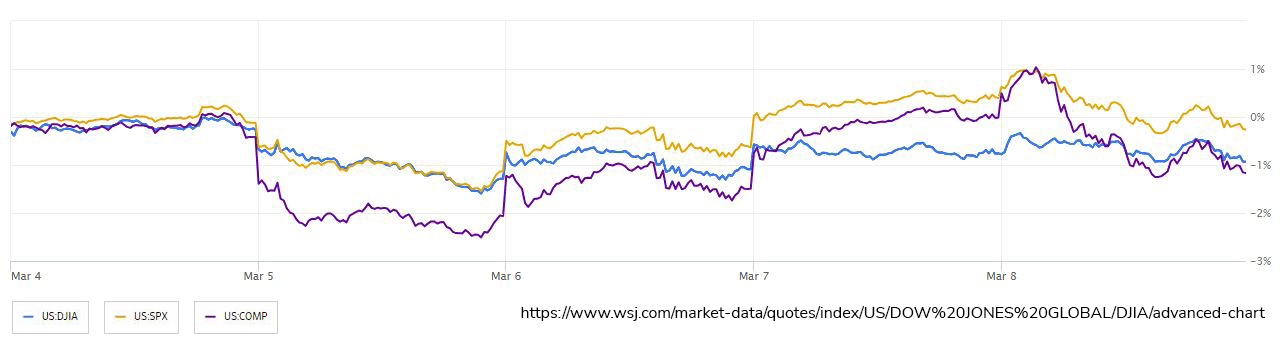
In the aftermath of a mixed jobs report, the S&P 500 faced pressure, largely due to weakness in the technology sector. The Nasdaq 100 dropped by 1.5% on Friday, with notable declines in stocks like Nvidia Corp. and Tesla Inc, though Apple and Alphabet were resilient. Sectors like semiconductors, retail, and airlines lagged, while REITs and staffing companies gained ground. Treasury bonds strengthened, and the dollar index dipped slightly. Gold prices rose, while Bitcoin futures saw volatility, and WTI crude oil prices fell. This setback comes amidst concerns about an overbought market, with abnormal gains prompting caution from analysts like Michael Hartnett of Bank of America Corp. Meanwhile, Bitcoin briefly surged to $70,000. Market pricing reflected a dovish shift, with swap contracts implying expectations of Fed easing by year-end. Gina Bolvin of Bolvin Wealth Management Group emphasized the significance of the uptick in unemployment, suggesting increased odds of a rate cut in June. In the tech sector, outflows from funds were observed, with Cathie Wood of ARK Invest suggesting a correction in semiconductor stocks. Despite a dip in Nvidia's stock, its strong rally and potential for a stock split generated interest among investors. Overall, market sentiment remained cautious amid economic uncertainties and potential Fed actions.
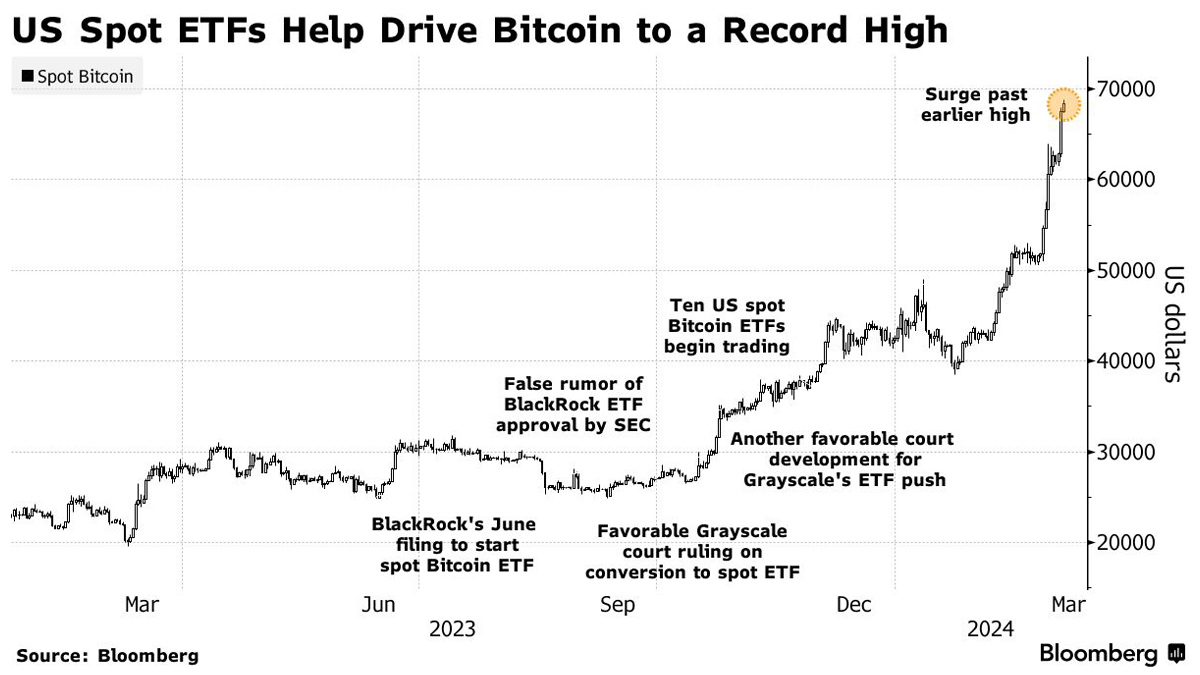
Bitcoin surged to a record high for the first time in over two years, reaching $69,191.95 before swiftly plummeting to $59,317.16, indicative of the cryptocurrency's volatile nature. This fluctuation was largely attributed to profit-taking by traders, as many found themselves in profitable positions. The surge was fueled by bullish sentiment in the derivatives market, with leverage exacerbating gains and losses. Despite this turbulence, Bitcoin has seen a remarkable resurgence in 2024, driven by factors such as the approval of spot-Bitcoin exchange-traded funds (ETFs) by the US Securities and Exchange Commission (SEC), increased institutional investment, and anticipation of a reduction in Bitcoin's supply growth. The approval of ETFs has widened Bitcoin's accessibility and attracted significant investment from institutional heavyweights like BlackRock Inc. and Fidelity Investments, with nearly $8 billion flowing into ETFs in less than two months. The looming halving event, coupled with the momentum from spot ETFs, has stirred fear of missing out (FOMO) among investors. Bitcoin's resurgence follows a tumultuous period marked by a bear market in 2022, during which it lost nearly a third of its value amid regulatory scrutiny and market crashes. Regulatory efforts worldwide have intensified, aiming to curb fraud and ensure compliance among crypto exchanges. However, despite earlier skepticism from figures like Jamie Dimon and Charlie Munger, the entry of BlackRock into the crypto space via Bitcoin ETFs signals a significant shift in traditional financial institutions' attitudes towards cryptocurrencies. The approval and subsequent success of BlackRock's ETF underscore a broader trend of institutional adoption driving Bitcoin's resurgence, marking a pivotal moment for the crypto industry.
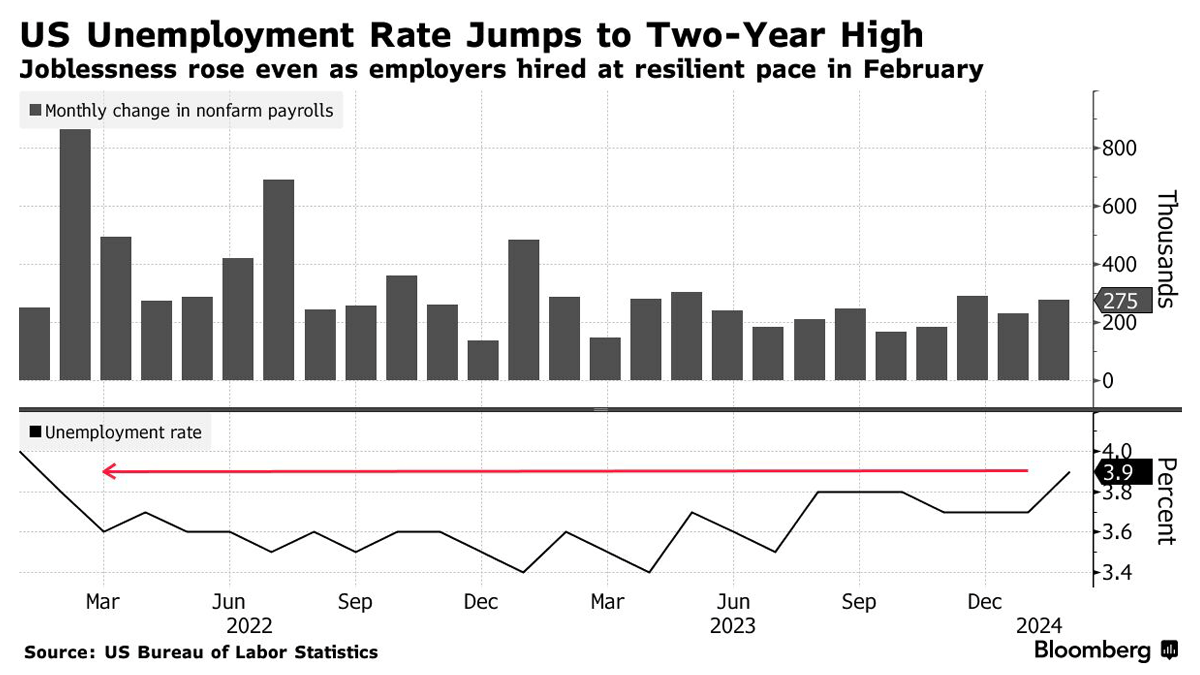
In February, hiring in the U.S. surged, with employers adding 275,000 jobs, surpassing economists' expectations. However, wage gains slowed down, indicating a robust economy with decreasing inflation. Despite the strong job growth, the unemployment rate rose slightly to 3.9%. Average hourly earnings only increased by 0.1%, lower than the projected 0.2% and a notable decrease from January's 0.5%. Job gains over the last two months were revised downward significantly as well, with January’s job gains revised downward materially from 353,000 to 229,000. Over the past year, the U.S. economy has consistently added jobs, averaging 230,000 per month. Various sectors, including healthcare, government, and food services, contributed to the February job gains. Although concerns arose from the strong January numbers, suggesting a resurgence in inflation, the mixed February report suggests a balanced economic trajectory. This data aligns with expectations of the Federal Reserve lowering interest rates later in the year, potentially benefiting markets. However, the timing of Federal Reserve actions remains crucial, with the risk of hindering economic growth or reigniting inflation. Federal Reserve Chair Jerome Powell indicated a cautious approach, emphasizing the need for more evidence of sustainable inflation reduction before considering rate cuts. However, in hearings on Capitol Hill last week Powell suggested they were close to meeting that threshold for rate cuts. Despite market expectations, the European Central Bank kept its key interest rate unchanged, though interest rate cuts are expected in the EU by this summer.

 860-291-1998
 Schedule Demo