
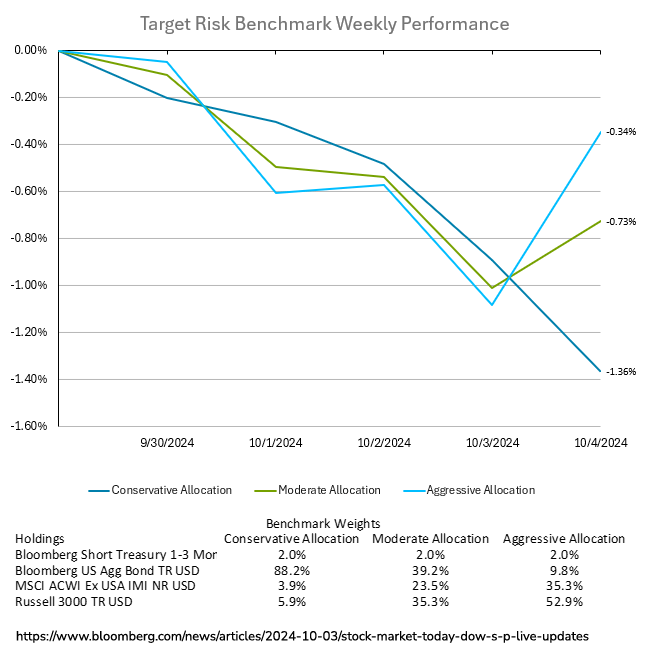
After the release of a stronger-than-anticipated jobs report, US Treasury yields rose sharply as traders reconsidered expectations for the Federal Reserve's future rate cuts. The policy-sensitive two-year Treasury yield hit 3.93%. The Bloomberg US Aggregate Bond Index ended the week with a loss of -1.52% as traders scaled back bets for Fed rate cuts in the near term. With these figures, traders are now predicting a smaller rate cut, less than a quarter-point, in November. The US dollar posted its best weekly gain in two years. The stock market responded positively, with both the S&P 500 and Nasdaq 100 rising to their highest levels since mid-September, ending the week with slight gains. Despite the optimism, some experts, like Mohamed El-Erian, Queens’ College Cambridge president and Bloomberg Opinion columnist, warned that the report implies the Fed's battle with inflation is far from over. The robust labor market, especially with wage growth, indicates that inflation may remain persistent.
In other developments, oil markets posted their strongest weekly performance since March 2023 due to ongoing geopolitical tensions in the Middle East, particularly involving Israel, Lebanon, and Iran. These geopolitical risks continue to influence broader economic sentiment. International equities ended the week with losses, with the MSCI ACWI ex USA IMI Index falling -0.89%. The cross currents caused aggressive portfolios to outperform conservative portfolios for the week. The aggressive target risk benchmark below limited losses to -0.34%, while the moderate target risk benchmark fell by -0.73%. The conservative target risk benchmark suffered the most from the rise in bond yields, falling -1.36%.
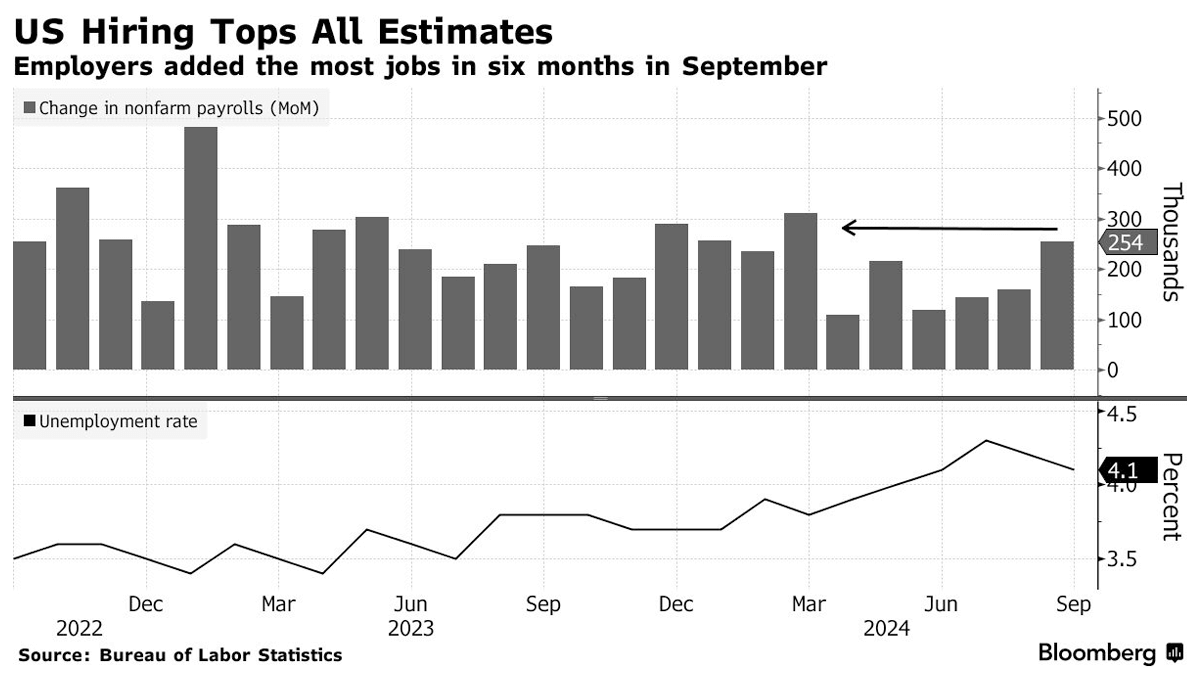
The U.S. job market posted stronger-than-expected growth in September, with nonfarm payrolls increasing by 254,000, the highest in six months, and unemployment dropping to 4.1%. This surge exceeded economists’ predictions of a 150,000 gain, signaling that the labor market remains robust. Wage growth also accelerated, with average hourly earnings rising by 4% year-over-year. These figures reduce the likelihood that the Fed will implement a large interest-rate cut in November, as concerns over a weakening job market have lessened. The report highlighted that fewer Americans are working part-time for economic reasons, and those who recently lost jobs were able to find new employment quickly. Sectors like leisure, hospitality, health care, and government led the hiring increase, while manufacturing saw job losses for a second month. Fed Chair Jerome Powell had previously emphasized the importance of protecting the labor market when initiating a large rate cut in September. The strong data provides some assurance that the Fed’s policies are stabilizing the economy, making a smaller 25-basis-point cut more likely for November. Market reactions to the report were positive, with the S&P 500 rising, along with Treasury yields and the dollar. The labor data also holds political implications, with wage and job growth becoming central issues as Vice President Kamala Harris campaigns amid economic concerns from voters. However, challenges such as strikes and disruptions from Hurricane Helene may affect future job reports. Overall, the latest data suggests a resilient labor market, contributing to an improved outlook for the US economy.
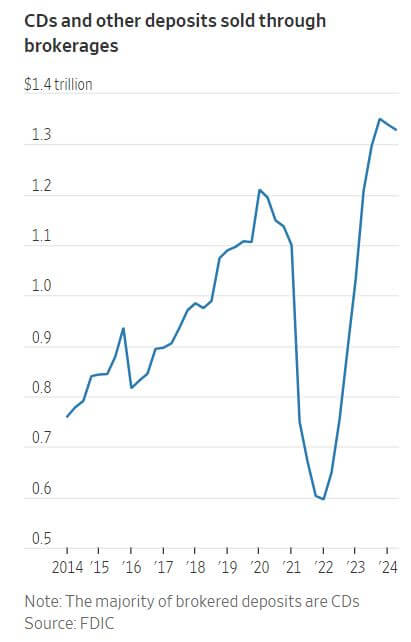
The period of 5% cash returns is closing early for some investors as callable certificates of deposit (CDs) are increasingly being recalled by banks. Prior to the Fed's recent rate cuts, many banks offered high-yielding CDs, some exceeding 5%. These CDs often included call provisions, allowing banks to return funds and stop accruing interest before the maturity date. When rates were rising, investors overlooked these features, but now, with rates falling, banks like JPMorgan Chase and U.S. Bank are calling back these CDs to reduce their interest liabilities. Many retail investors who sought secure returns did not fully understand the callable nature of these products. Callable CDs tend to offer higher yields than noncallable CDs, but their appeal diminishes when rates fall. Investors are left reinvesting at lower rates, with the highest 12-month CD rate now around 4.8%. According to Kathy Jones, a fixed-income strategist, the long-term underperformance of callable CDs compared to noncallable ones could cost investors, as these higher-rate products are subject to early termination. Brokered CDs, often managed through firms like Fidelity and Charles Schwab, represent a significant portion of the market, with around 18% of CDs at Fidelity being callable. Banks typically call these CDs as soon as prevailing rates drop, making them an efficient tool for managing liabilities for banks but a riskier option for investors seeking stable returns. As the 5% yield era fades, investors must now navigate reinvestment options in a lower-rate environment, often turning to safer but lower-yielding alternatives.

 860-291-1998
 Schedule Demo