
The Dispatch keeps you informed on the markets, trends and how Freedom Advisors is serving you.
Investors have become increasingly concerned about the equity outlook in 2023. On the recent heels of a hotter-than-expected Personal Consumption Expenditures Price Index (PCE) reading and a recent 3-week slump in equity markets, investors have increased positions on call options for the Cboe Volatility Index (VIX). The VIX, commonly known as the Wall Street fear gauge, rose above 23 last week. Typically, levels below 20 on the VIX signify complacency in equity markets and readings above 30 indicate investors are nervous or fearful of potential market turbulence. The VIX measures the implied volatility of a mix of S&P 500 options with different strike prices and expiration dates. The result measures how much investors expect the S&P 500 to move up or down over the next month. Higher implied volatility means that options traders expect more significant market moves in the near future, which often translates to higher uncertainty and risk aversion levels.
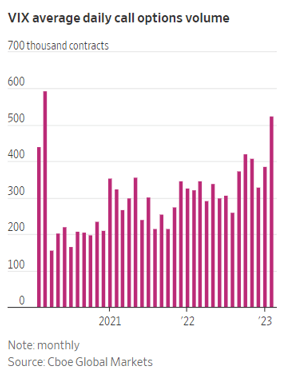
Traders are purchasing hedges against a potential downturn, with more call options betting that the VIX will rise having been traded in February 2023 than at any time since March 2020, according to Cboe data. First, when stocks rebounded at the start of the year, investors piled back into the market, leading to a renewed need for hedging. Second, recent hot economic data has increased the likelihood that the Fed will be forced to continue raising interest rates to bring inflation down, halting the early-year stock rally. Meanwhile, revived risk of the Fed plunging the economy into a recession with more rate increases is boosting market volatility. Derivatives markets show the federal funds rate rising as high as 5.39% in August, the loftiest level since the central bank began tightening last year.
Equity hedging can be an effective risk management strategy for reducing potential losses in portfolios during market volatility. For example, an investor concerned about a potential market downturn may purchase put options on the stocks in their portfolio. If the market declines, the put option will increase in value, offsetting some of the losses in the equity holdings.
While hedging can help protect a portfolio from downside risk, it comes at a cost. The cost of purchasing put options or index futures can reduce portfolio returns in periods of market stability. The investor may lose money on the hedging positions if the market doesn't experience a significant downturn. Therefore, investors need to carefully weigh the benefits and costs of hedging before deciding to implement such a strategy.
Freedom Advisors has several strategies for including options in your portfolio from dedicated options managers to money managers who include options writing as part of their overall portfolio strategy. Schedule a consultation with our expert consultants today to explore the benefits of including these options in your portfolio.
MT-355057

Freedom Advisors offers a turnkey asset management platform (TAMP) with a complete portfolio management solution, comprehensive outsourcing of operations, and high-touch service to help advisors run efficient practices and deliver superior outcomes for their clients.

This website is for investment professionals only. It is not intended for retail investors. Retail investors who are interested in our investment services should contact a financial advisor.
© Freedom Advisors. All rights reserved.
 860-291-1998
 Schedule Demo