
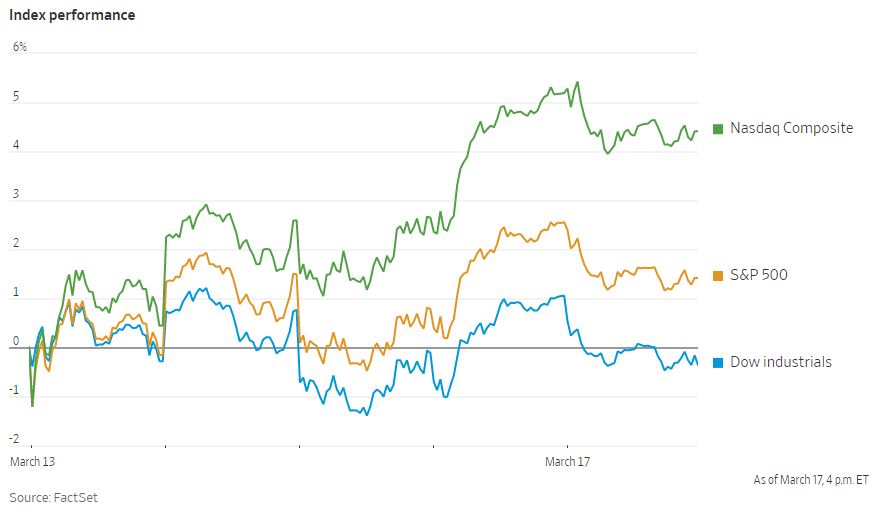
Global markets closed out a tumultuous last week on a negative note, with US stocks slipping and Treasuries continuing to climb. The financial sector was the biggest drag on the S&P 500, with Credit Suisse falling in New York trading after Reuters reported that several major banks were curbing trading with the troubled Swiss lender. A rout in First Republic dragged on other US regional lenders, with a gauge of the sector dropping more than 10% this week. Shares of First Republic plunged 33% on Friday. Meanwhile, the Nasdaq 100 slipped despite heading for its best week since November, amid expectations the Federal Reserve will temper its tightening path. On Friday the S&P dropped 1.1%, the Dow was down about 387 points, or 1.2%, and the tech-heavy Nasdaq Composite declined 0.7%. Despite Friday's losses, the S&P and Nasdaq ended the session with weekly gains of 1.4% and 4.4%, respectively, while the Dow turned in a small weekly loss. The 10-year Treasury yield deepened its decline after a softer-than-expected reading on inflation expectations, with yields falling across the curve. There is speculation that the fallout from bank failures will lead the Federal Reserve to pause its recent flurry of interest-rate hikes at next week’s meeting. Gold hit an 11-month high, while bitcoin surged to its highest levels in months. Meanwhile oil headed for its worst week so far this year. The University of Michigan reported that consumer sentiment declined in early March for the first time in four months.
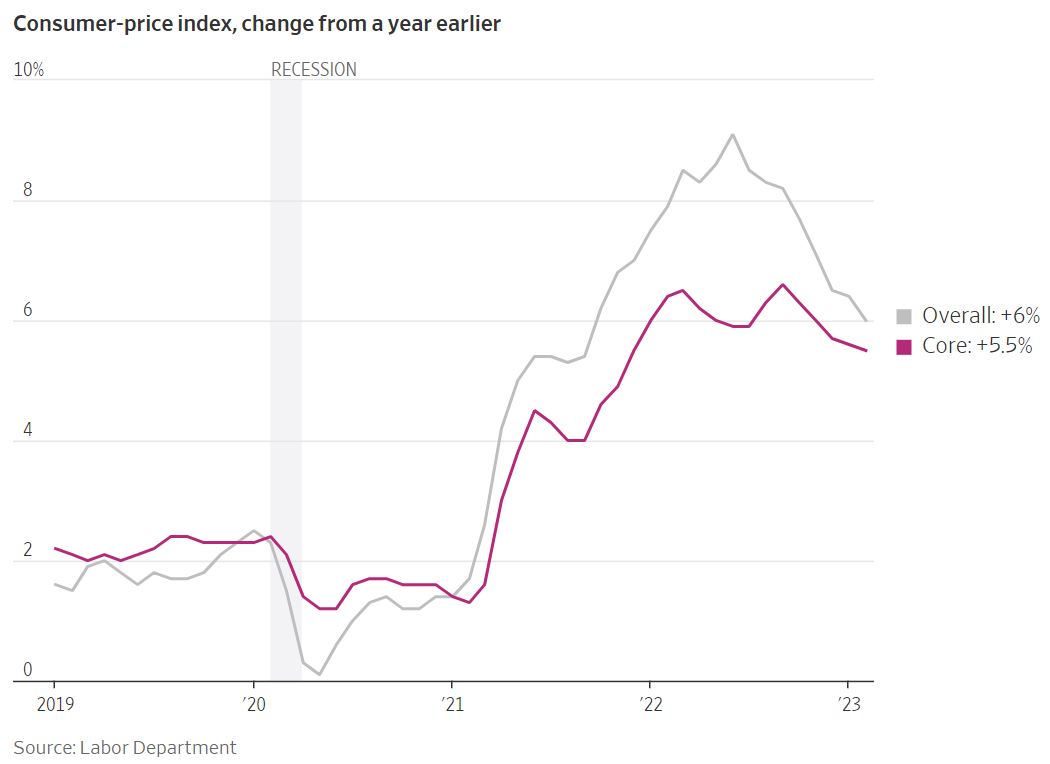
In February 2023, the Consumer Price Index rose 6% from a year earlier, down from a 6.4% gain the prior month, indicating a slight easing of inflation. Excluding volatile food and energy costs, core prices advanced a slightly slower 5.5%. Core prices advanced by a seasonally adjusted 0.5% in February, the largest monthly gain in five months. However, US producer prices fell unexpectedly in February, while retail sales declined 0.4% from the previous month, increasing the likelihood that the Federal Reserve will put a pause on interest-rate hikes as it considers the impact of a banking crisis on the economy. The PPI for final demand fell from the prior month and increased 4.6% from a year earlier, the slowest pace in almost two years and well short of estimates. The decline in the PPI reflected decreases in both goods and services, but more than 80% of the retreat in merchandise can be attributed to a drop in the cost of eggs, the agency said. Services prices were restrained by machinery and vehicle wholesaling. The recent banking crisis, which saw the collapse of Silicon Valley Bank and Credit Suisse Group's shares drop, has caused concern about the stability of the banking sector and prompted some to call for the Fed to pause its hiking campaign.
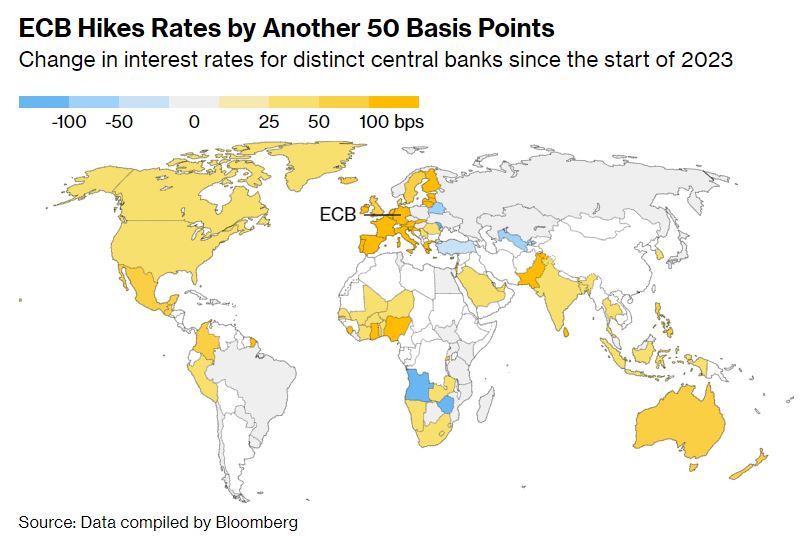
The European Central Bank (ECB) has increased its interest rates by 50 basis points to 3%. This surprised some analysts who had expected a smaller increase after the collapse of Silicon Valley Bank and pressure on Credit Suisse but was in line with forecasts predating the recent banking sector stress. The move is an early indication of how other major central banks, such as the Federal Reserve and Bank of England, may respond to market distress. The ECB said that it would provide emergency support to Eurozone banks if necessary as it seeks to combat high inflation without exacerbating strains in the financial system. ECB President Christine Lagarde said that while the bank would be cautious about future rate increases, it remained ready to provide liquidity to banks. Lagarde also noted that, “the banking sector is in a much, much stronger position than where it was back in 2008.” The ECB’s decision has increased the likelihood that the Fed will raise US interest rates by a quarter-percentage point at its meeting this week, with interest-rate futures markets indicating more than an 80% chance of a rate increase. That is a notable increase from the 50/50 odds indicated by futures earlier last week. The ECB’s decision to increase interest rates suggests that the bank still sees pushing down inflation as its priority. Analysts believe that the lack of guidance in the bank’s statement indicates that it may shift to less aggressive monetary policy if the market turbulence continues.

 860-291-1998
 Schedule Demo